 MENU
MENU APPLY
APPLY GIVE
GIVE CHALLENGE



The Neumann University Counseling Center's mission is to promote students' well-being within a safe and confidential environment through a range of supportive services.
We are here for you. Students who desire to schedule an appointment with one of our counselors must complete our electronic intake form. The intake form can be found on this page. If you need help, please send an email to CounselingServices@neumann.edu.
If you are a student in crisis please call Campus Safety at ext. 5555 if on campus; if off campus, call 911 or go to your nearest emergency room. The closest hospital is:
Riddle Memorial Hospital
1068 West Baltimore Pike
Media, PA 19063
(484) 227-9400
Location
The Counseling Center is located at 603B Convent Road in the brick house next to the Mirenda Center Parking Lot.
Eligibility for services
Neumann University undergraduate students are eligible for counseling services at no cost.
Mission
The Counseling Center supports the mission of Neumann University by encouraging the spiritual, intellectual, cultural, emotional, and social/sexual development of students. The Counseling Center:
Vision
The Neumann University Counseling Centerwill be recognized as a regional leader in mental health and well-being for college students, especially those from under-resourced and historically marginalized populations. We strive to provide a dynamic and accessible approach to counseling, prevention services, programming and consultation.
Scope of Service
Services provided:
Short-term counseling including:Some of the concerns that are commonly addressed in short-term counseling are:
Services NOT provided:
For emergency mental health services please call 911.
Referral to Community Resources
The Counseling Center will provide a student with an external referral if the student would be better served by an outside counselor/resource. The counselor will assist in a smooth transition.
Some of the concerns that are commonly addressed through referral to services outside of the Counseling Center include:
The general guidelines listed above are only intended to serve as a guide to assist treatment decisions. The nature and complexity of presenting concerns and the broader context are considered in making the appropriate treatment recommendation(s). Cases are evaluated individually, and the professional judgment of the mental health provider(s) will determine the best treatment option for each student.
In accordance with legal and ethical standards, all counseling sessions are confidential. Counselors may not disclose whether a student is receiving counseling services or make any disclosures about the content of sessions without the written consent of the student receiving services.
State and federal law states that there are exceptions to confidentiality, as follows:
If you have any additional questions or concerns about confidentiality please talk with a counselor or e-mail the Counseling Center.
Individual Counseling
Counseling services at Neumann University are free to all undergraduate Neumann students and confidential within the confines of the law. Students initially meet with a counselor for an intake assessment to discuss their presenting concerns and to determine the type of services which will best meet their needs. Students interested in individual counseling should complete the Counseling Center's Intake Form.
Services for the Neumann Community
In addition to personal counseling, The Counseling Center offers a variety of other services to the Neumann Community. The staff is available to faculty and staff for consultation services to discuss issues as they pertain to students.
Timely Care
All Neumann University undergraduate and graduate students can also access Talk Now at www.NUCare.care using their phone or laptop anytime, anywhere, 24 hours a day/7days a week (including break periods and holidays). Students also have access to 9 free scheduled counseling sessions per year, resetting every Aug 1st, with a counselor of their choosing. Create a user profile at www.NUcare.care, and select the “TALK NOW” icon to be connected remotely with a mental health provider.
Our Counseling Center staff is comprised of board-certified master-level providers and master-level interns that practice as generalists, which allows us to work with a wide variety of needs. We provide positive and supportive treatment that is designed to focus on the student's overall wellness.

Bonnie Yake M.S., LPC
Associate Dean, Counseling & Student Health
Bonnie Yake, M.S., NCC, LPC, GCDF
Associate Dean: Counseling and Student Health, Counselor
Bonnie Yake serves as the Associate Dean for Counseling and Student Health. Bonnie provides strategic vision and oversight for the Counseling Center and Student Health Services units at Neumann University while serving as one of the Counselors here. She has more than 10 years of experience in clinical mental health counseling, health promotion and career development. She is committed to a humanistic approach assisting students in developing skills to manage their mental health and to help them thrive at Neumann and beyond.
Contact Information:
Email: yakeb@neumann.edu
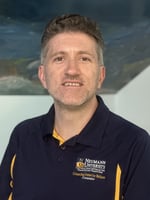
Br. Andrew McCarty M.S., LPC
Counselor
Br. Andrew McCarty, M.A., M.S., NCC, LPC
Counselor
Andrew McCarty serves as a Counselor in the Counseling Center at Neumann University. He has extensive experience working with emerging adults and considers it a privilege to journey with Neumann students in therapy. He has master’s degrees from the Pastoral Counseling department at Loyola University – Maryland and the Community and Trauma Counseling program at Thomas Jefferson University. Andrew uses a trauma-informed, integrative clinical approach, drawing from current and classical techniques. He strives to create a hospitable, empowering, strengths-based, and culturally sensitive space. Andrew is a 10-month counselor with availability August-May.
Contact Information:
Email: mccartya@neumann.edu

Lewis Johnson M.S., LPC
Counselor
Lewis Johnson NCC, LPC, CCTP
Counselor
Lewis Johnson (he/him) is a Licensed Professional Counselor and National Certified Counselor, supporting clients in Pennsylvania. Lewis' passions center around working with young adults and adults in the Black and LGBTQIA+ communities on issues of racial and identity-based trauma, religious abuse and spiritual trauma, gun violence, generational trauma, and men’s issues. He earned his master's degree in Pastoral Clinical Mental Health Counseling from Neumann University.
Lewis approaches therapy from a person-centered approach and believes that every client with whom he interacts already has the knowledge and answers they seek within them; however, having a companion to travel on their journey with them can help ease the pain and sadness that it can sometimes bring. He recognizes the ways that trauma can impact every facet of a person’s life and live within one’s body, so he works with each client to maintain the wellness of their mind, body, and soul.
Contact Information:
Email: JOHNSONL@neumann.edu
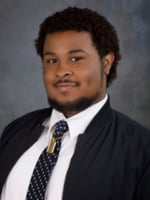
Justin Gallashaw M.S.
Counselor
Mr. Justin Gallashaw M.S.
Counselor
Justin is a double alum and recent graduate from Neumann University's Clinical Mental Health Counseling Program. As a master's level clinician, Justin enjoys journeying along with a student. In addition, working with individuals to become the person they want to see! Justin has worked in higher education for 2 years, building interpersonal connections with diverse groups across campus. Although Justin works at Neumann in other capacities, his counseling style is rooted in providing a safe and welcoming space for those he is working with. As a growing clinician, Justin is grounded Person-Centered therapy, understanding that you (the student) have the power to create your new future.
Contact Information:
Email: gallasha@neumann.edu

Claudia Sebastian
Graduate Counseling Intern
Claudia Sebastian
Graduate Counseling Intern
Claudia Sebastian is a Graduate Intern at the Counseling Center, where she provides individual and group counseling to undergraduate students. She holds a bachelor's in psychology from Wilmington University in Delaware. As a master’s student in Neumann's Clinical Mental Health Counseling program, she is passionate about supporting students and young adults in their personal growth and mental health journeys. Claudia takes a person-centered, trauma-informed, humanistic approach to therapy, emphasizing unconditional positive regard and cultural sensitivity. She is committed to creating a safe and empowering environment where clients can explore their strengths and work toward healing and self-discovery
Contact Information:
E-mail: cg_sebastia@knights.neumann.edu

Kalere Caldwell M.S.
Graduate Counseling Intern
Kalere Caldwell M.S.
Graduate Counseling Intern
Kalere “KC” Caldwell is a Clinical Mental Health Counseling graduate intern with a strong background in psychology, mental performance, and executive functioning support, currently completing her Master's degree at Liberty University. She holds a Bachelor of Arts in Psychology from Towson University and a Master of Science in Exercise and Sport Psychology from Southern Illinois University Edwardsville, with training focused on the intersection of mental health, athletic performance, and achievement-oriented settings. As an Executive Functioning Coach at Philadelphia Integrative Psychiatry, Kalere works with adolescents and adults to strengthen skills such as focus, organization, emotional regulation, and follow-through, and she also serves as a Mental Performance Consultant through her platform, Clear Minds MP, supporting athletes in building confidence, resilience, and healthy coping strategies. Kalere brings a strengths-based, collaborative approach to counseling and is passionate about supporting individuals navigating academic, athletic, and life transitions.
Contact Information:
Email: caldwelk@neumann.edu
To request an appointment, please complete an electronic intake form. Our address is 603B Convent Rd and our business hours are 9:00 am - 5:00 pm, Monday-Friday. Our center operates by appointment only and does not accept walk-ins. Once you complete an electronic intake form, a counselor with matching availability will contact you via email.
If you need to speak with a mental health professional right away, please utilize TimelyCare or the National Crisis Hotline, 9-8-8, which will connect you with a counselor 24/7.
For general questions, please feel free to contact the Counseling Center by calling (610) 358-4263 or email to CounselingServices@neumann.edu.
Neumann University
participates in the
State Authorization
Reciprocity Agreements.
Neumann University © 2026. All Rights Reserved.


