 MENU
MENU APPLY
APPLY GIVE
GIVE CHALLENGE


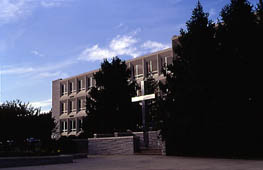
When the Sisters of St. Francis of Philadelphia opened the doors of Our Lady of Angels College in September 1965, the total enrollment was 115 female students. Today, as Neumann University (NU), the university educates more than 2,100 students, engages over 17,000 alumni, and is one of the largest employers in Aston Township, PA.
Since 1965, the College has met the needs of its students, even beyond its initial traditional undergraduate programs. In September 1971, a program for adult women was initiated. This program is now known as the Adult and Continuing Education program, allowing adult students to earn their bachelor’s degree faster by utilizing six-credit courses in an online or evening format.
Also in 1971, the administration provided safe, professional daycare for children of students who attended classes. A childcare center opened on the third floor of the main building and quickly evolved into the current Child Development Center (1973) accommodating pre-school aged children. In 1980, the Board of Trustees approved the name change from Our Lady of Angels to Neumann. The name Neumann College seemed fitting given the significant role that then Bishop John Neumann had in assisting the Sisters of St. Francis of Philadelphia in the early days of the Congregation. Also in 1980, Neumann formally accepted its first male undergraduate students. In 1985, the Thomas A. Bruder, Jr. Life Center, housing the Bruder Gymnasium and the Meagher Theatre, became the third building on the Neumann College campus.
Expanding undergraduate degree programs and initiating graduate programs became the goal to ensure academic growth. In 1982, the College was granted approval to award a Master of Science degree in Pastoral Counseling (now Clinical Mental Health Counseling), followed in 1987 by permission to grant an Associate of Arts degree in Liberal Studies. Master of Science degree programs have since been developed in the areas of Accounting, Athletic Training, Business and Organizational Leadership, Clinical Mental Health Counseling, Cybersecurity, Education, Forensic Psychology, Medical Laboratory Science, Nursing, and Sport Business.
In 2004, the College was granted approval to offer its first doctoral program, the entry-level clinical Doctorate in Physical Therapy (DPT). In 2006, approval was granted for the College to offer its second doctoral program, the EdD in Educational Leadership.
In late April 2009, the College received approval (the certificate of authority) from the Pennsylvania Department of Education to become Neumann University.
For Neumann to provide a holistic experience for its undergraduate students and to assist with the growth goals, a residential program was approved by the Board of Trustees. When the first residence hall opened in 1997, the building housed 177 students and transformed campus life. There are now three Living and Learning Centers on campus, Chiara Honors House, and an adjacent apartment complex (Buoni Building) leased for student housing, all together having capacity to house more than 750 students.
In 2004, Neumann University acquired a 46,434-square-foot office building located at the Concord Road entrance of the campus from the Sisters of St. Francis of Philadelphia. The newly named Rocco A. Abessinio Building now houses additional classroom and office space.
New athletic facilities came next. Neumann University opened the Mirenda Center for Sport, Spirituality and Character Development on October 17, 2009. The Mirenda Center features more than 72,000 square feet of space including an arena, classroom, meeting and event rooms, exhibits, offices, and athletic spaces. This new, state-of-the-art facility was named in honor of Dr. Rosalie M. Mirenda (Neumann’s president from 1996 to 2017) and her husband, Tony, by the Board of Trustees in acknowledgement of the Mirendas’ many years of hard work, dedication, and commitment to the Catholic Franciscan identity and mission of Neumann.
Seeking to unify an ever-expanding campus, the St. John Neumann Circle was created to connect the original Bachmann Building and the Bruder Life Center on one side of Convent Road with the Mirenda Center and residence halls on the other side of the road. On April 1, 2010, two commissioned statues were placed in the Circle. The most prominent, on a high base and at the Circle’s center, is of St. John Neumann, the namesake of the University. The second, at ground level and facing the students who walk from the residence halls and the Mirenda Center, is a Sister of St. Francis of Philadelphia, representing the sponsoring Congregation.
In 2014, the focus on academic excellence and student learning continued. A two-phased library renovation was completed. The first phase of the project was completed in 2012 with the addition of new learning and study commons areas on the third floor, the creation of a media-enhanced classroom designed to seat 90, and offices to house the Neumann Institute for Franciscan Studies, endowed in 2000 by the Sisters of St. Francis of Philadelphia. The final phase of the project was completed in time for the start of the fall 2014 semester, as the University’s fiftieth anniversary celebration began.
In 2016, a new $5 million, 10,000-square-foot addition to the Bruder Life Center was completed. The addition, named the John J. Mullen Communication Center, was built to support students in the Communication and Digital Media (CDM) major and students who join Neumann Media to explore their creative talents. The Mullen Communication Center houses two TV studios with the latest camera, broadcasting, recording and editing technology; three radio studios; Wenger rooms with sound isolation for recording and editing; a student meeting room; a green room; and a multipurpose hall with theater-in-the-round capability, smart board TVs, giant projection screens, and more.
Dr. Chris Everett Domes assumed the presidency of Neumann University on July 17, 2017. He previously served as president of Silver Lake College of the Holy Family in Manitowoc, Wisconsin. His inauguration was held on October 6, 2017. He succeeded Dr. Rosalie Mirenda, who served as Neumann’s president from 1996 to 2017 before retiring.
A strong proponent of Catholic Franciscan education, Dr. Domes’ record of accomplishment spans 31 years in higher education. He has led initiatives in strategic planning, fundraising, academic program extension, enrollment management, community relations, technology access, and campus growth.
In January 2019, the university opened the Health Sciences Center, a 17,000-square-foot addition to the Rocco Abessinio Building (RAB), and the Data Analytics Lab on the third floor of the RAB. The Health Sciences Center facilitates the education of nurses, physical therapists, athletic trainers, and exercise and nutrition specialists. It includes the 300-seat Bayada Teaching Auditorium, named in honor of Ann and Mark Baiada, founders of Bayada Home Health Care and longtime friends of the university. The Data Analytics Lab features glass classroom walls, a stock market ticker, mounted TVs with stock information, three 75” instructional high-definition screens, rise-display monitors at each desk, and a server lab for hacking simulations.
In July 2019, after spending more than a year gathering input from various constituencies, Dr. Domes launched the 2019-22 Strategic Plan, which includes four pillars: leadership, excellence, visibility, and resources. The plan also integrates the themes of diversity and collaboration into every aspect of campus life.
On March 12, 2020, in response to the growing spread of coronavirus and the disease it causes (COVID-19), Dr. Domes announced that the university would switch to all online instruction for two weeks (March 16-29). The transition to virtual learning was soon extended, and all classes for the spring and summer semesters of 2020 were held online.
Working closely with local public health officials and adhering to guidelines of the Centers for Disease Control, the university began the fall 2020 semester using a hybrid model of instruction. This model provided an online instruction option for all courses and an in-person option for small classes. Students in many courses were split into two sections, which rotated weeks of virtual and in-class instruction. The primary goals of this hybrid model were the health and safety of students, faculty and staff, and the opportunity for some in-person instruction for students. All students were provided the option to select all online classes.
The fall 2020 semester started with requirements to wear masks, maintain social distance, and show the results of self-administered health checks before entering campus buildings. Large gatherings were prohibited, plexiglass barriers were installed in certain offices, and signs about good public health practices were placed across the campus. These regulations were extended and remained in effect through the spring and summer semesters of 2021.
Vaccinations against COVID-19 were developed by the end of 2020, and Americans began receiving inoculations in January of 2021. On June 10, 2021, Dr. Domes announced in an email to the campus community that vaccinations would be required (with few exceptions) for students, faculty, and staff in the fall of 2021. The plan was to return to in-person instruction wherever possible, and approximately two-thirds of fall 2021 courses were held in person with masks required indoors. The mask requirement was lifted in March 2022.
On June 30, 2021, Dr. Chris Domes and Sr. Mary Kathryn Dougherty, OSF, congregational minister of the Sisters of St. Francis of Philadelphia, signed an agreement of sale for Neumann University to purchase Our Lady of Angels Convent, three other smaller buildings, and 63 acres from the Sisters, the congregation that founded the university in 1965. The land is adjacent to the university’s campus, which almost doubled in size (from 70 acres to 133) with the sale. Part of the agreement stipulated that all 38 Sisters who lived in the convent at the time of the sale would be able to stay in the building for several years.
The sale allowed Neumann to initiate a 15-year campus master plan, which included building a student center, adding athletic facilities, increasing classroom space in current academic buildings, and expanding capacity to accommodate resident students.
Since the first section of Our Lady of Angels Convent was built in 1873, the building had been home only to the Sisters of St. Francis of Philadelphia. That 149-year tradition changed on Thursday, August 25, 2022, when the first group of Neumann lay students moved into one wing of the historic structure, which Neumann had purchased 14 months earlier. By the start of the fall 2022 semester, the university had converted one section of the sprawling 152,000-square-foot building to Glen Riddle Hall, the latest residence facility on campus. The wing was previously known as the Franciscan Spiritual Center.
Thirty-nine students moved into Glen Riddle Hall, including first-year honors program students who lived on the third floor and returning students who selected a health and wellness community on the second floor. The total occupancy included a graduate assistant, resident assistant, and community coordinator.
On September 8, 2021, Neumann University opened a food bank for students for the first time in its history. The Knights’ Pantry, meant to alleviate food insecurity among enrolled students, began operations on the fifth floor of the Rocco Abessinio Building. The pantry offered non-perishable food and personal hygiene items to any undergraduate or graduate student with a university ID, no questions asked.
Noteworthy events in the winter of 2022 were the death of a legendary university coach and broad grassroots support for Ukraine, which Russia invaded in late February. Coach Len Schuler, who worked at Neumann for 38 years and coached more than 1,000 games, passed away on February 5, 2022. The basketball court in the Mirenda Center was named in his honor on March 28. On March 9, more than a hundred student and faculty volunteers packaged and heat-sealed 15,072 meals for Ukrainian refugees. Later that month, Janis Chakars, a communications professor who has played in punk rock bands for 30 years, used his expertise to create Band Together, a compilation of songs donated by 16 bands to support Ukraine.
On May 13, 2023, longtime university president Dr. Rosalie Mirenda passed away. Soon after the news reached campus, Dr. Chris Domes captured the mood of the community. “It is with a heavy heart that I share sad news of the passing of Dr. Rosalie Mirenda, President Emeritus of Neumann University,” he wrote. “Rosalie served students with passion and committed herself to living the mission and values of Neumann University for over four decades as a professor, academic leader, and for twenty-one of those years, as president.”
Dr. Mirenda was president of Neumann University from 1996 to 2017. From the moment she took the helm of the institution, she forged a reputation as a tireless advocate and savvy visionary. Under her leadership, enrollment tripled, annual and capital giving increased, the campus expanded from 14 to 68 acres, new academic programs were added, athletic teams grew from 9 to 23, and state-of-the-art residence halls were built to accommodate more than 700 students. In 2009, Neumann achieved university status and opened the Mirenda Center for Sport, Spirituality and Character Development, a 72,000 square foot athletic facility.
During the spring of 2023, the university twice gained national recognition for its commitment to sustainability. In a competition sponsored by the National Wildlife Federation, Neumann placed first in the country in the Campus Race to Zero Waste small campus division for per capita recycling. The university’s eco-friendly system logged 39.6 pounds of recycled material for every student, professor, and staff member on campus.
The Catholic Climate Covenant also recognized Neumann University as one of the top three Catholic campuses in the country for climate action and environmental sustainability. The organization noted that Neumann’s efforts “have fostered a culture of responsibility and sustainability throughout the institution … and highlight the power of collective action in creating a more sustainable campus.”
On July 1, 2023, the university instituted a new academic structure, eliminating the School of Arts and Sciences and redistributing programs and faculty previously housed there into the other three schools. Communication and Digital Media, Mathematics, and Pre-Engineering were shifted into the School of Business as were general education programs in art, languages, music, and theater. English, Criminal Justice, Liberal Arts, Political Science, Pre-Law, and Psychology became part of the newly re-named School of Social Sciences, Humanities, and Education. Biology, Medical Laboratory Science, Pre-Chiropractic, Pre-Med, and Pre-Pharmacy moved to the School of Nursing and Health Sciences.
Dr. Domes characterized the reorganization as a way to generate collaboration and innovation among faculty, resulting in cross-disciplinary courses that will blend the intellectual depth of traditional liberal arts with the talents that students need for leadership in their chosen careers.
Neumann expanded its residential capacity in Glen Riddle Hall during the summer of 2023, adding space for 20 students on the fourth floor. Forty students had moved into the second and third floors of Glen Riddle in August of 2022, living side-by-side with the same number of Sisters of St. Francis of Philadelphia – an innovative arrangement that gained national coverage by The Wall Street Journal, CBS Evening News, The Washington Post, and many other media outlets.
The expansion and applications by dozens of students to live in the wing of Our Lady of Angels Convent confirmed the wisdom of the university’s purchasing the convent in June of 2021.
Updated: September 1, 2023
Neumann University is sponsored by the Sisters of St. Francis of Philadelphia. The educational mission of the University is shaped by the tradition that inspired the lives of St. Francis and St. Clare of Assisi. Neumann University seeks to provide an education that balances the liberal arts with the professions in an environment which promotes the development of men and women who will embody the Franciscan values of reverence, integrity, service, excellence, and stewardship. These values are evidenced through relationships that recognize the uniqueness and dignity of others, and through a sense of responsibility and stewardship as a citizen of the local and global community.
IDENTITY
Neumann University, founded and sponsored by the Sisters of St. Francis of Philadelphia, is a Catholic institution of higher education in the Franciscan tradition.
MISSION STATEMENT
Neumann University educates a diverse community of learners based upon the belief that knowledge is a gift to be shared in the service of others and that learning is a lifelong process.
VISION STATEMENT
Neumann University strives to be a teaching university of distinction, providing innovative, transformational education in the Catholic Franciscan tradition. Neumann RISES on the core values of Reverence, Integrity, Service, Excellence, and Stewardship and lives the actions which these values inspire. Neumann’s curriculum promotes thoughtful and ethical leadership in service and response to a global and technologically complex world.
CORE VALUES - RISES
Neumann University, a Catholic university in the Franciscan tradition, promotes the following Core Values as integral to all academic programs, services, partnerships, and co-curricular activities.
Reverence
Integrity
Service
Excellence
Stewardship
Always and everywhere, Neumann University strives to:
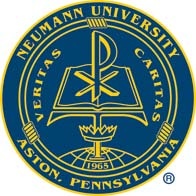
In anticipation of the opening of Our Lady of Angels College in 1965, Sister M. Theresa Clare, Sr. St. Joseph and Sr. M. Everilda Flynn, along with others, worked with Livingston Publishing Company in Narberth, PA to create the motto and seal of Neumann University which aptly demonstrates Neumann's ideals.
Veritas-Caritas: To Live the Truth in Love
The motto Veritas-Caritas receives its origin from Paul's admonition to the Ephesians: "Rather let us profess the truth in love, and grow to the full maturity of Christ the Head" (Ephesians 4:15). It expresses a dedication to principles formative of mind and heart.
The concept is likewise found in the seal which is highlighted by the Gospel Book surmounted by the Chi-Rho, representative of Christ, the Source of All truth and Truth itself.
The Tau (Greek letter "T"), supporting the Gospel Book was often used by St. Francis of Assisi. For him it was a symbol of the cross and salvation; for us, it becomes a challenge to live a life rooted in Christ.
The Crown, encircling the Tau, symbolizes Mary, Queen and Mother, placed before us as a model of the virtues embodied in the mission of Neumann University.
The Globe is significant of the scope of influence possible to those involved in the educational process at Neumann University, founded in 1965.
The whole is enclosed in the traditional Franciscan symbol, the Knotted Cord, expressive of the vowed dedication of the Sisters of St. Francis of Philadelphia, the founders of Neumann University.
In early notes, circa 1964-65, we find suggestions for elements to be included in a seal. The inspiration appears to be the phrase from Ephesians 4:15 noted above: "It embodies the total Christian program of life; meets the Scriptural and the Apostolic emphasis of this age." The motto, Veritas, Caritas is noted as "distinctively Franciscan insofar as St. Francis made the Gospel his way of life, and declared to his brothers: 'A man has only as much knowledge as he puts into action.'" Other Franciscan elements: the Tau, was used extensively by St. Francis in his writings; the Cord "while distinctly Franciscan, is also a uniquely universal sign since the Franciscan way of life is the Gospel Life." (This is why the Gospel rests on the Tau). The final Franciscan element, the Crown, recognizes Mary as the "Queen of the Franciscan Order."
The code of conduct is a general statement of behavioral expectations built on the values espoused by the Neumann University community. Specific policies follow from the code. Because the Neumann University Community affirms the uniqueness and dignity of each person, any conduct that violates the dignity of another person, including threats of violence, verbal or physical; assault or abuse of any kind; hazing or harassment, including sexual harassment; lewd, obscene, or indecent language, behavior, or representations found offensive by others; or discrimination against another based on race, color, creed, sex, age, religion, national origin, sexual orientation, or disability is a violation of the Code of Conduct.
Because the Neumann University Community values a scholarly, supportive, and caring environment, any conduct that violates the pursuit of a scholarly, supportive, and caring environment including obstruction or disruption of institutional activities or of the individual pursuit of learning; the damaging, defacing, destruction, of the property of another; the theft of the property of another; or the unauthorized entry into or use of University property is a violation of the Code of Conduct. Because the Neumann University community reflects the spirit and values of Francis by developing a sense of responsibility, any conduct that violates the stated mission and values of the University or local, state, or federal law; the forging or altering of University records; the furnishing of false information to the University; failure to respond to the instructions of University personnel in the pursuit of their duties; or disorderly, irresponsible behavior of any kind is a violation of the Code of Conduct. Neumann University reserves the right to take disciplinary action against anyone who violates the Code of Conduct up to and including the addition of twelve points to the disciplinary record (dismissal) from the University.
Neumann University
participates in the
State Authorization
Reciprocity Agreements.
Neumann University © 2026. All Rights Reserved.


